Timeline
14 weeks (2022)
Project Overview
Museums have evolved far beyond glass cases and plaques. Today, they’re trusted knowledge centres connecting the past to the future. But a significant portion of the population simply isn’t engaging with them.
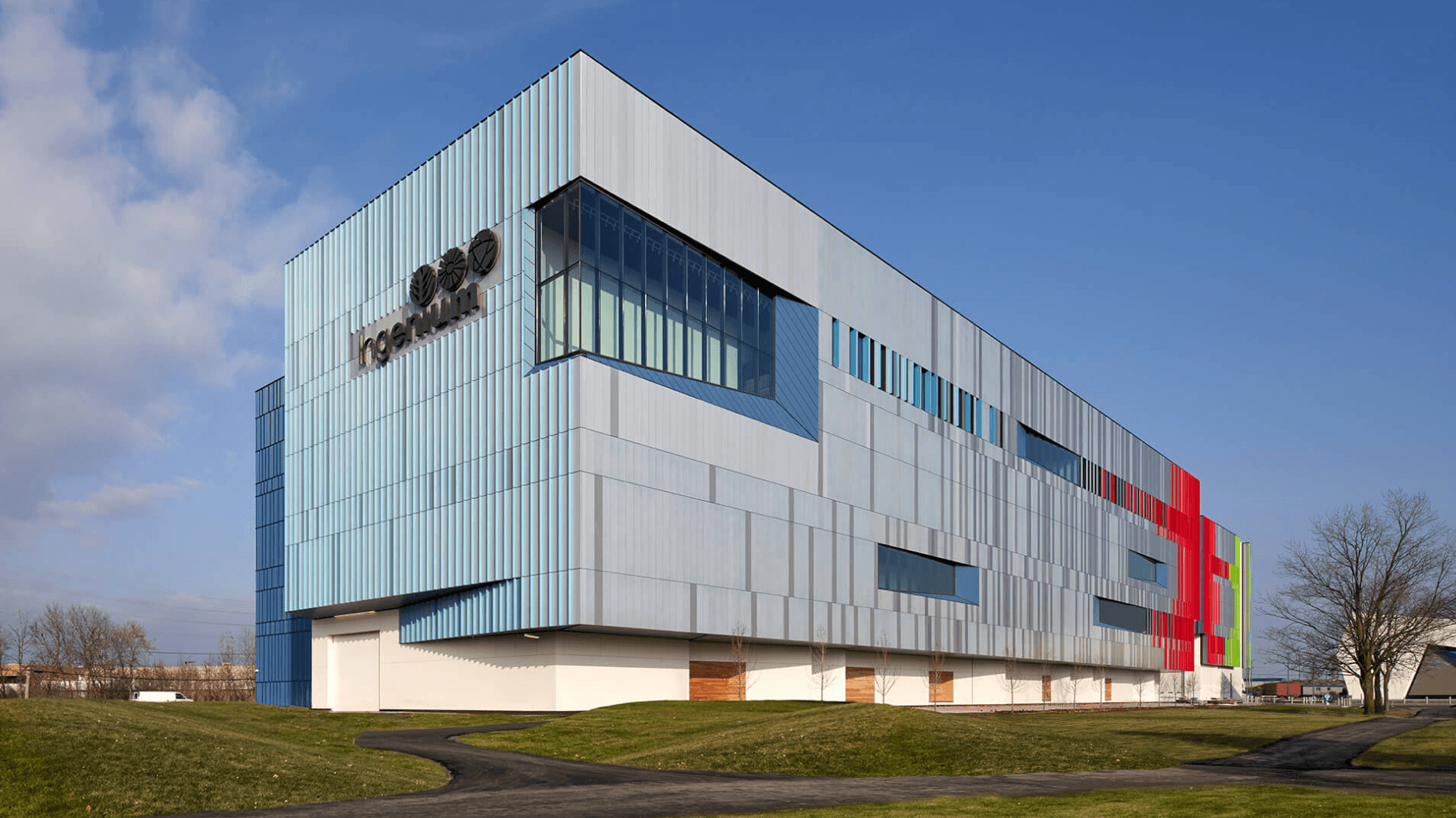
Ingenium, the governing body of Canada’s museums of science and innovation, partnered with Algonquin College’s Human-Centred Design program to tackle this.
The brief: design a demographic-specific approach to sharing engaging online content across Ingenium’s three museums. Our team of three took on this 14-week challenge.
The target audience? Generation Z — the most connected, most demanding, and most underrepresented group in museum attendance.
The Challenge
According to Ingenium and a 2020 Canadian Heritage Information Network report, 18 to 24-year-olds are the group least likely to engage with museums. This is a striking gap — Gen Z makes up 2.5 billion people globally (United Nations), the world’s largest population cohort.
COVID-19 amplified the urgency. Museum visitors dropped by 44%, and over half of museums saw a drop in revenue. While 50% responded by increasing online content by at least 30%, studies showed this content wasn’t successfully being interacted with.
Museums were going digital, but it wasn’t landing.
How might we retell the stories of artefacts online in such a way that will captivate Gen Z and spark their ingenuity?
Understanding the Audience
We began with a literature review to map Gen Z’s behaviours, needs, and existing relationship with museums. The picture was vivid:
in 2018, 95% of teenagers had smartphone access;
in 2016, 82% of 12th graders used social media daily.
Technology dominates their communication, sociability, and leisure. The on-demand economy has made them the most demanding generation yet. If something doesn’t fit their needs, they move on.
Gen Z prefers
information in small chunks to manage cognitive load
favours visuals over text
and is more comfortable learning online than in traditional settings.
They also strongly support organizations that prioritize inclusivity; a value aligned with Ingenium’s mandate.
In Western countries, young adults associate museums with boring, rigid school field trips. Interestingly, in Asia, Gen Z represents the core museum visitor population because museums there represent cultural identity and belonging. Among Western Gen Z who do visit, motivations are telling:
20.6% go for assignments
18.8% to broaden knowledge
14.9% for school trips
and just 9.2% out of curiosity.
The secondary research gave us a strong foundation. But to truly understand what would make Gen Z care, we needed to hear from them directly.
Primary Research
We used a mixed-method approach combining quantitative and qualitative research. First, a 28-question online survey distributed through social media and organizational partnerships across Canada. We received 49 responses, of which 45 met our criteria. Gen Z individuals aged 18–24 residing in Canada.
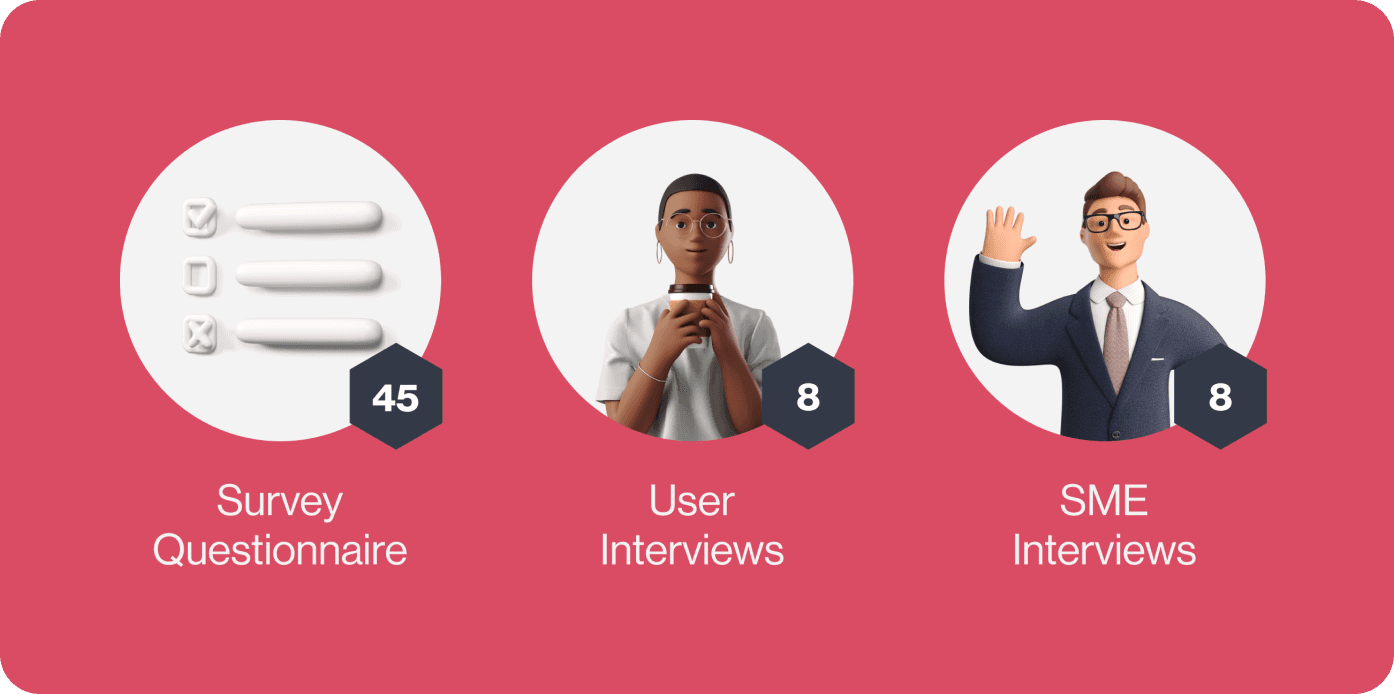
Key findings:
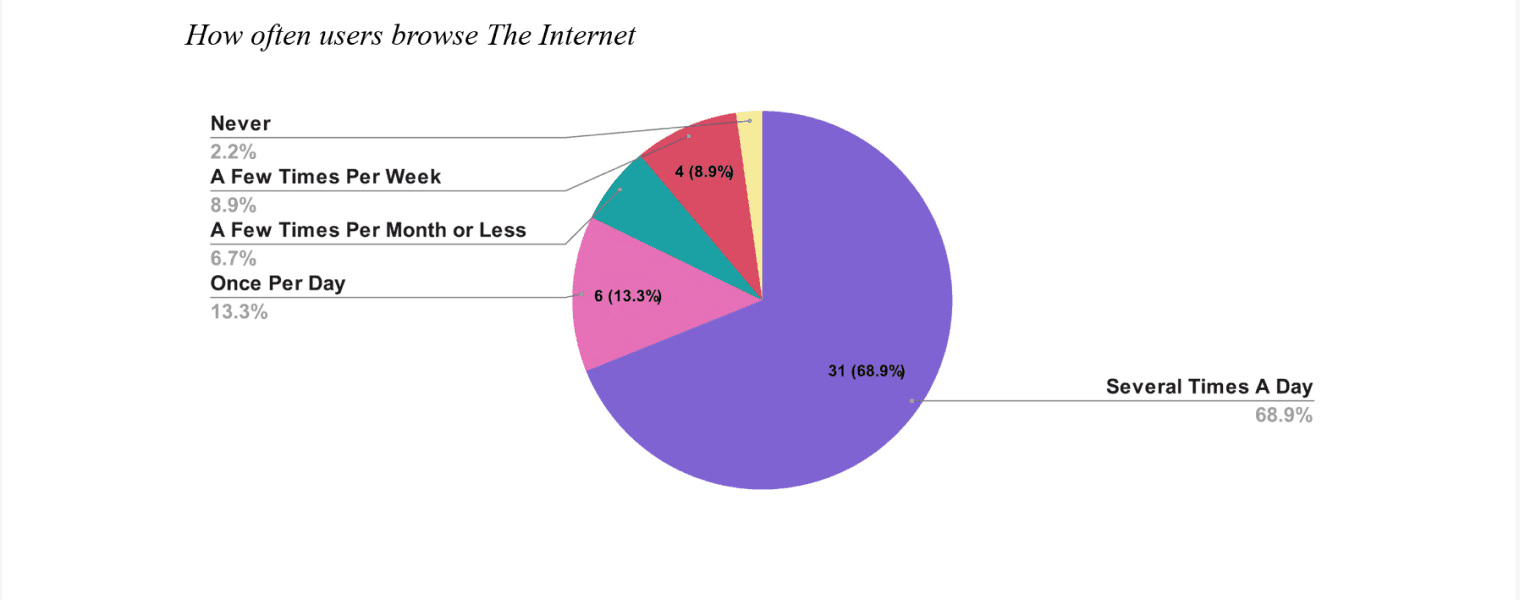
over three-quarters browse the internet multiple times daily
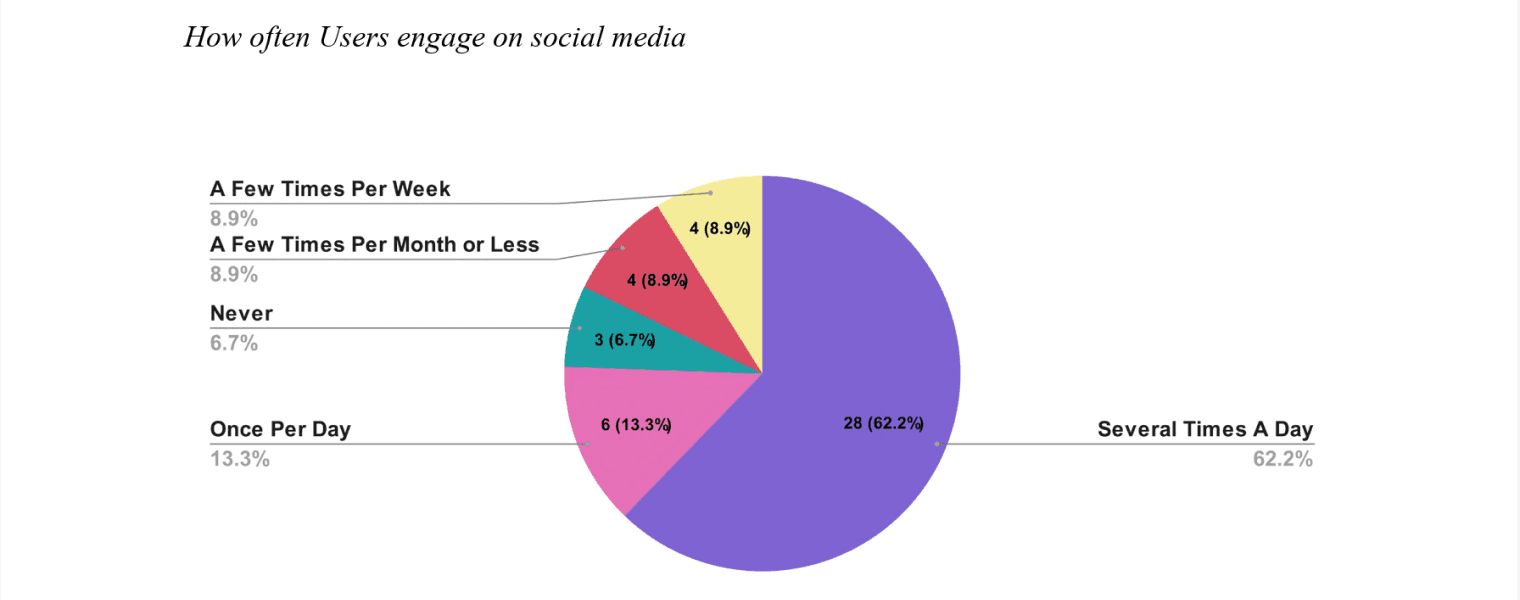
two-thirds engage on social media just as frequently
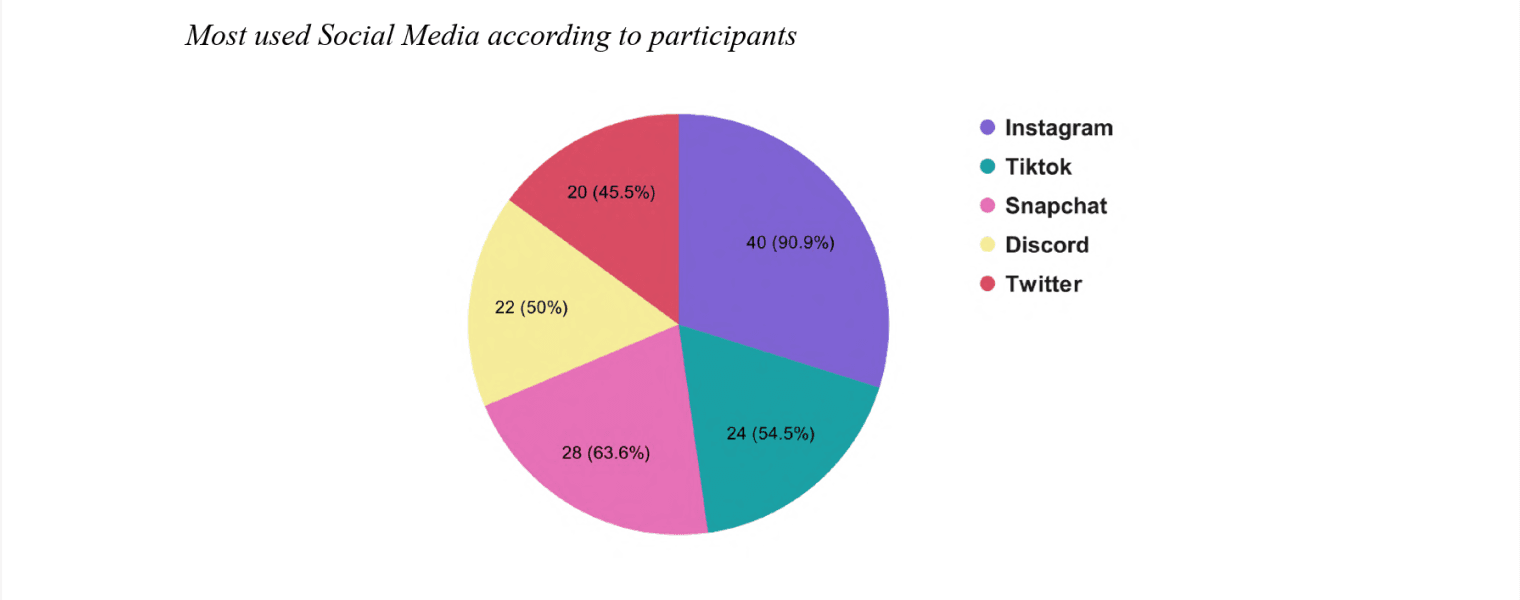
and Instagram was the most-used platform.
Most telling: 80% said having fun while learning is important, and 78% enjoy going to museums.
The barrier wasn’t interest, it was something else.
We then conducted 60-minute semi-structured interviews with 8 users, including a “Try It Out Virtually” section where they explored museum websites and activities while thinking aloud. We also interviewed 8 subject matter experts: curators, educators, accessibility specialists, and communications professionals.
What We Heard
Strong themes emerged:
5 of 7 users wanted brain-stimulating, curiosity-provoking content
5 of 7 wanted multi-sensory experiences
5 of 7 emphasized visuals
and 6 of 7 described their own creative outlets.
One participant, exploring Google Arts and Culture’s Kandinsky experiment, said:
“This is more my thing. I’m engaged with this. More mind-stimulating for me.”
Six of seven users responded to this activity with captivation, making it a benchmark for our design.
SME interviews reinforced the importance of storytelling around artefacts (7 of 8 SMEs), accessibility (5 of 8), diversity in representation (5 of 8), and connecting artefacts to innovation and daily life (5 of 8).
Analysis & Synthesis
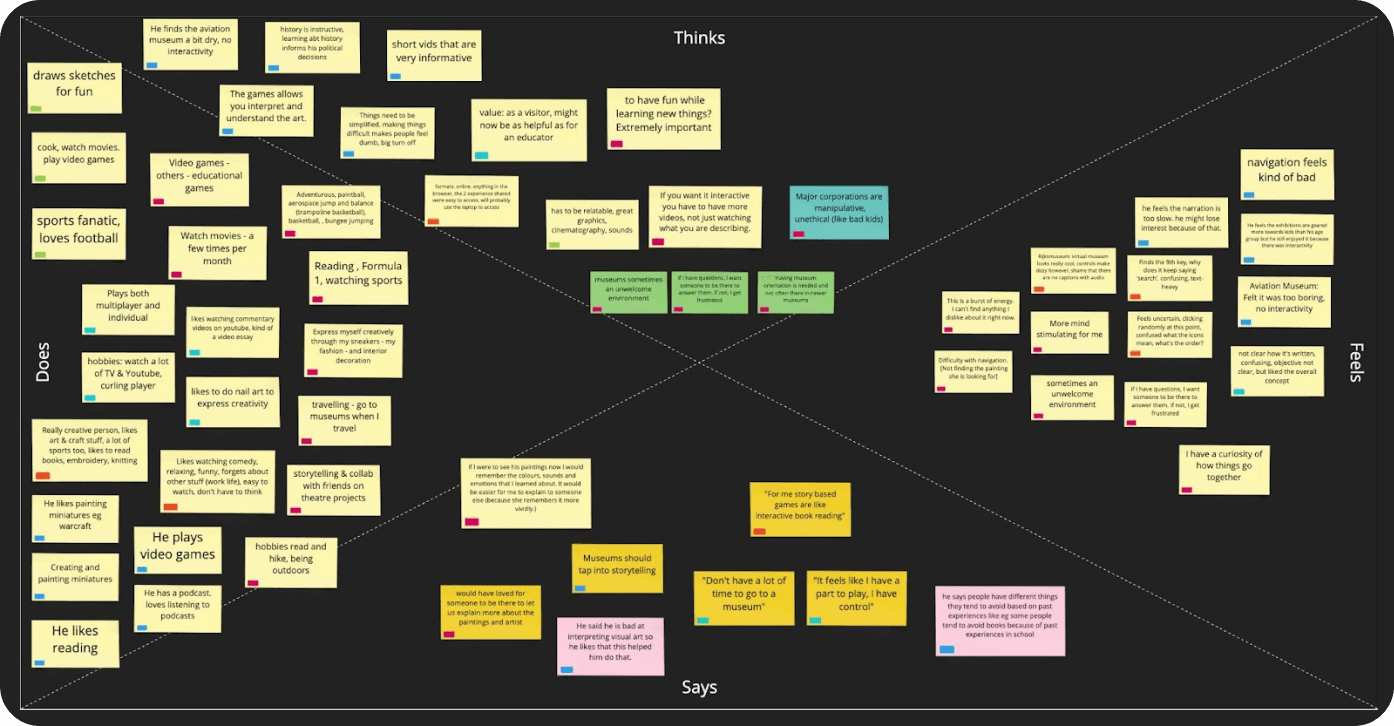
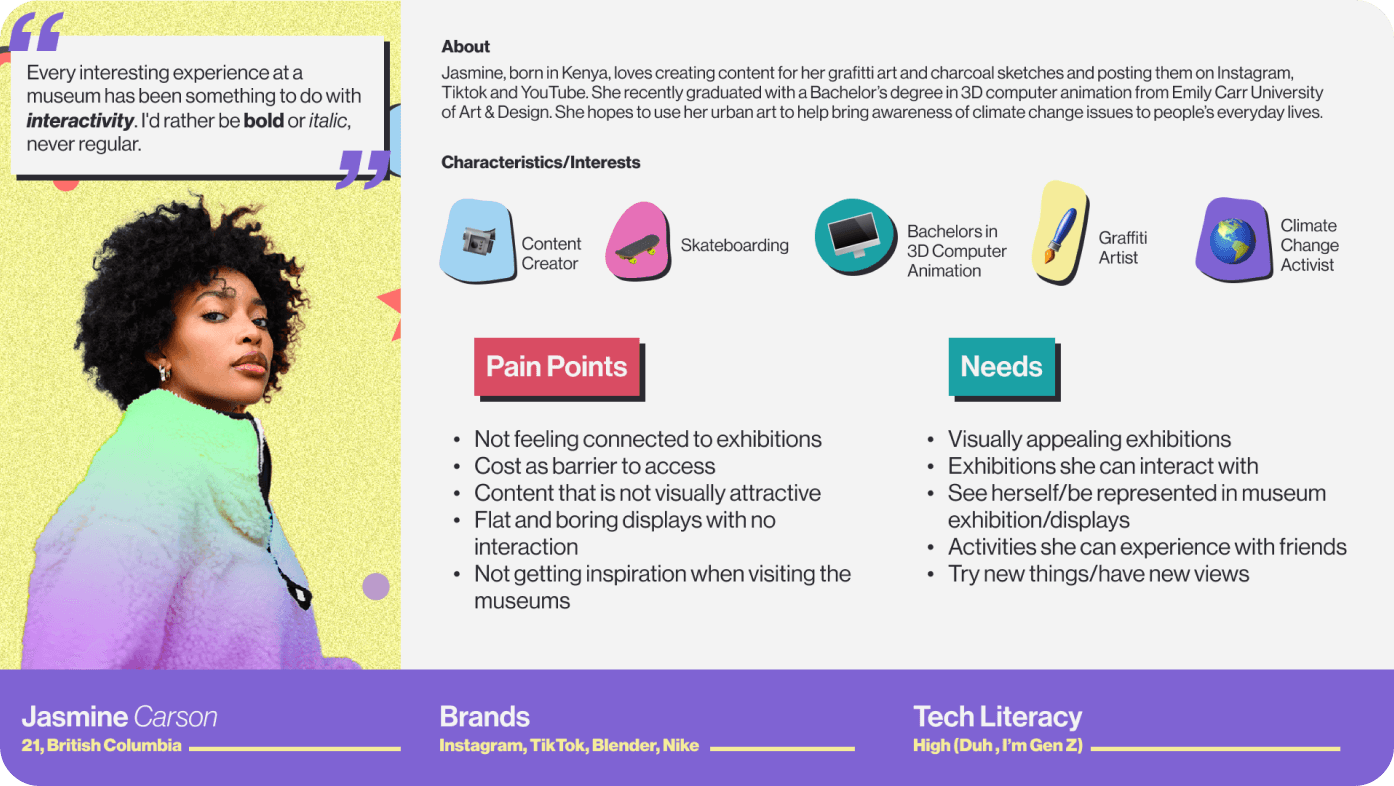
We cross-correlated survey data with interview insights using thematic analysis on Miro. From this, we built an empathy map, an Iceberg Model uncovering systemic barriers, and a persona representing our typical user: creative, visually inclined, culturally curious, digitally native but perceiving museums as rigid and designed for kids and grandparents. Her quote:
“I’d rather be bold or italic, never regular.”
Seven Experience Principles
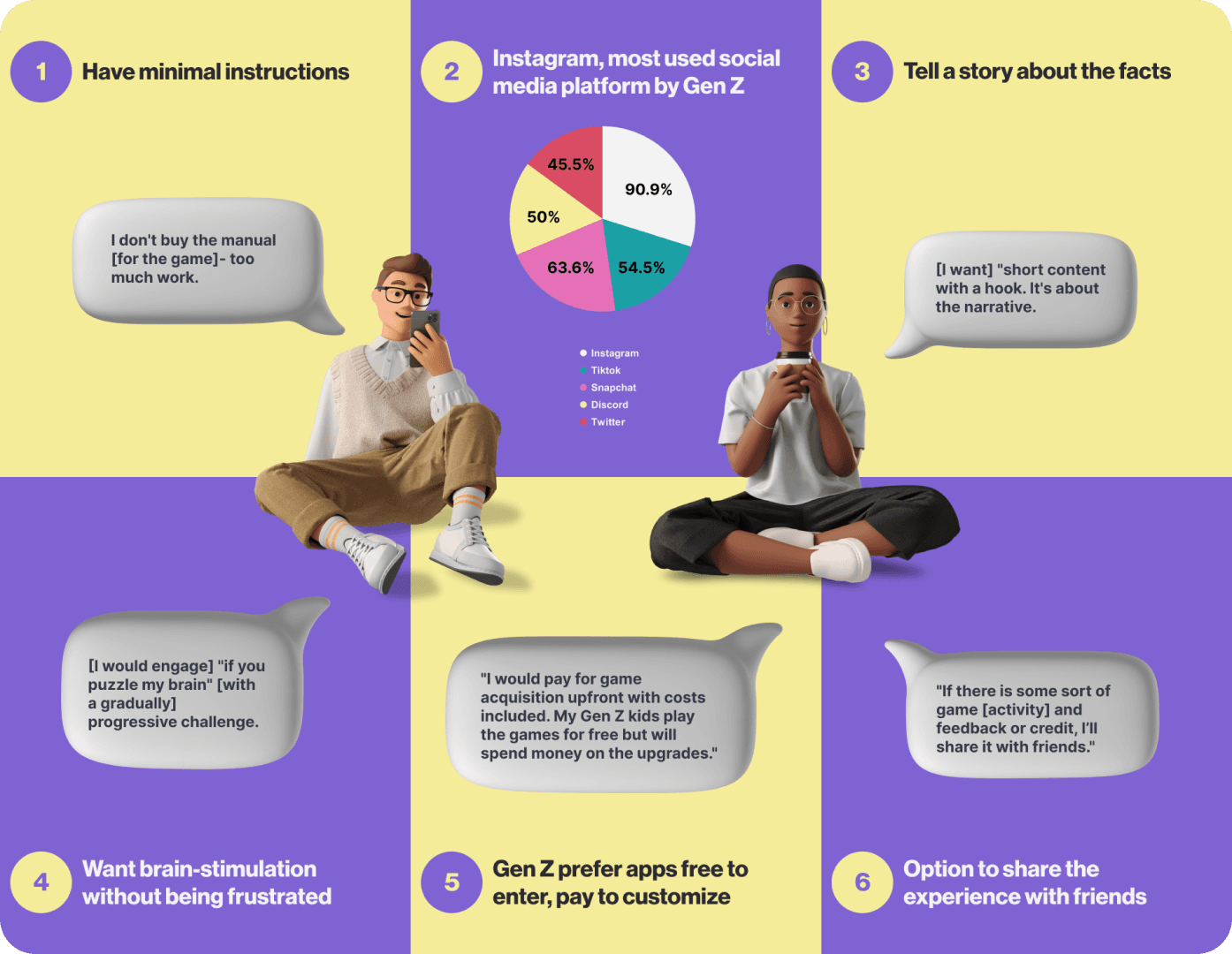
Our analysis distilled into seven principles that would guide every design decision:
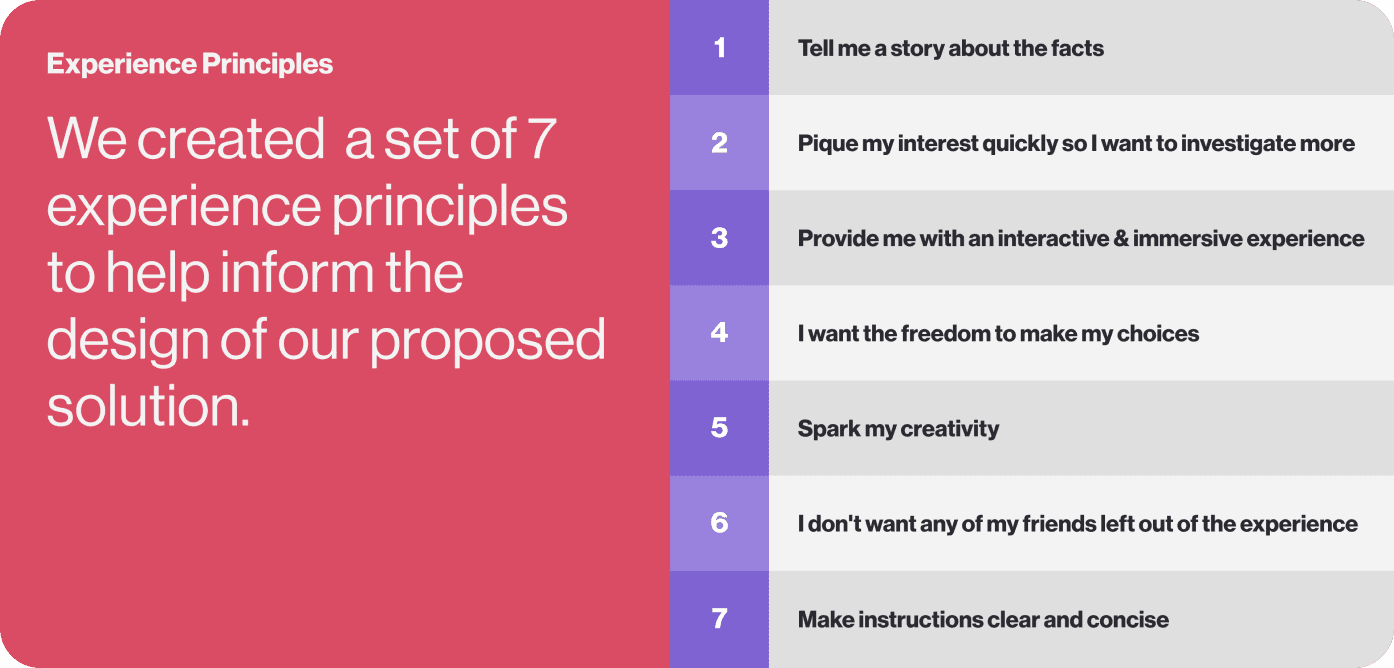
With our principles defined and our users’ voices guiding us, it was time to imagine solutions. We started with two very different ideas.
Ideation & Early Concepts
Concept 1: Role-Playing Game
A tabletop-style RPG played on Discord, where Ingenium would create adventure stories woven around actual artefacts, co-written by RPG authors and museum curators. Players would create their own characters and freely explore narratives. This leaned into storytelling, immersion, and creative freedom.
Concept 2: Digital Trading Card Game
A mobile app built around collectible digital cards. Users would log in weekly for new packs featuring artefacts ranging from common to rare, with each card’s value tied to its history and story. Users could flip cards to learn more, trade with friends, and earn rewards. This tapped into collectibility, social sharing, and bite-sized storytelling.
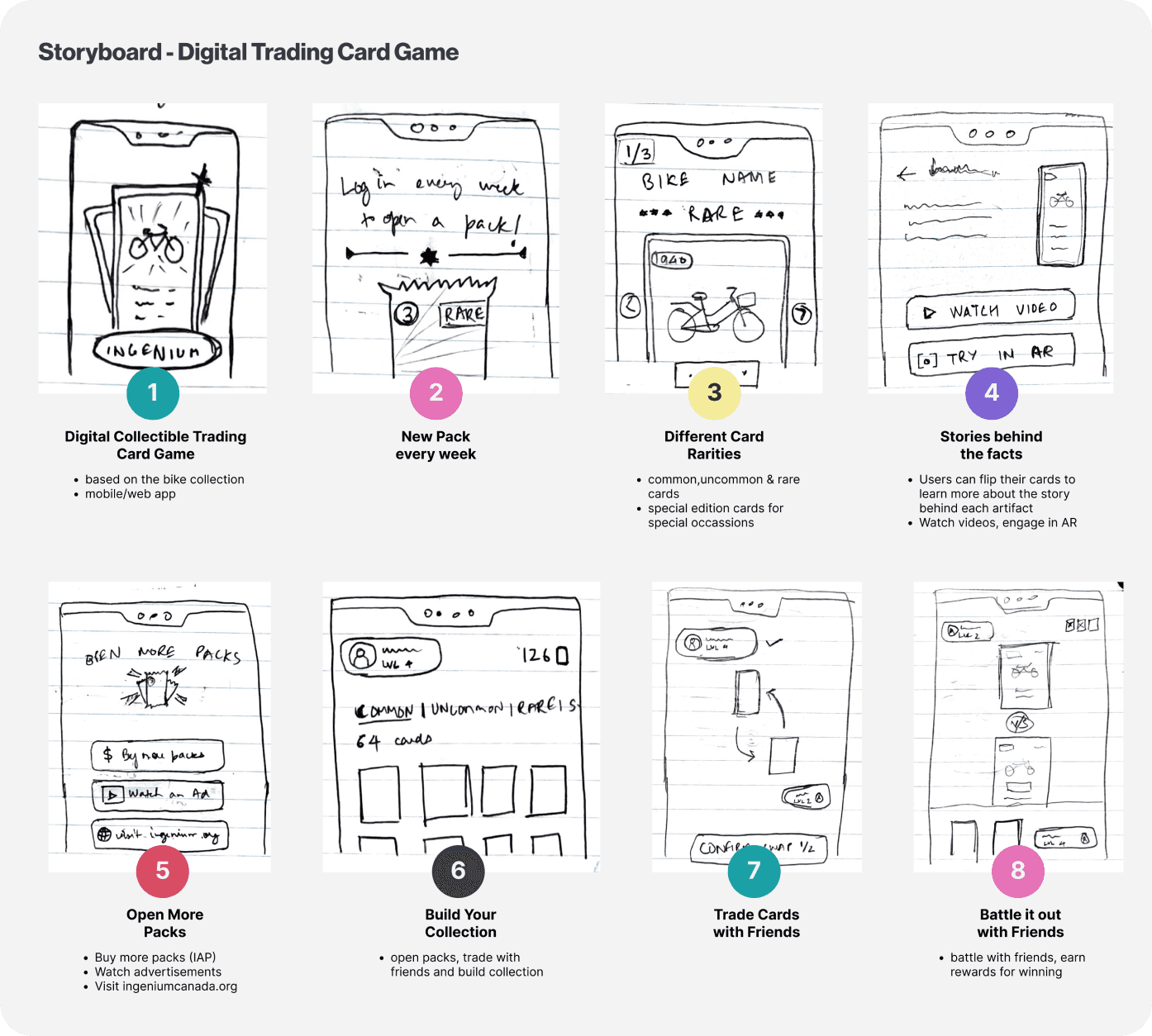
Both concepts felt promising on paper. But when we put them in front of real users, the story took an unexpected turn.
Validation and the Pivot
We brought both concepts to validation participants using storyboards that walked them through the full user journey. The RPG hit practical walls: detailed onboarding including character creation before even starting, plus real-time staffing needs for moderation. The Trading Card Game received warmer initial reactions. Users compared it to Pokemon and WWE cards but museum artefacts didn’t carry nostalgia. Users couldn’t justify the cards’ value and felt the novelty would fade.
This was a pivotal moment. Rather than forcing one concept to work, we took the best of both: storytelling from the RPG, collections from the Trading Card Game. Our experience principles were validated, it was the execution that needed rethinking.
The result was Myseum — Build Your Own Museum.
The Solution: Myseum
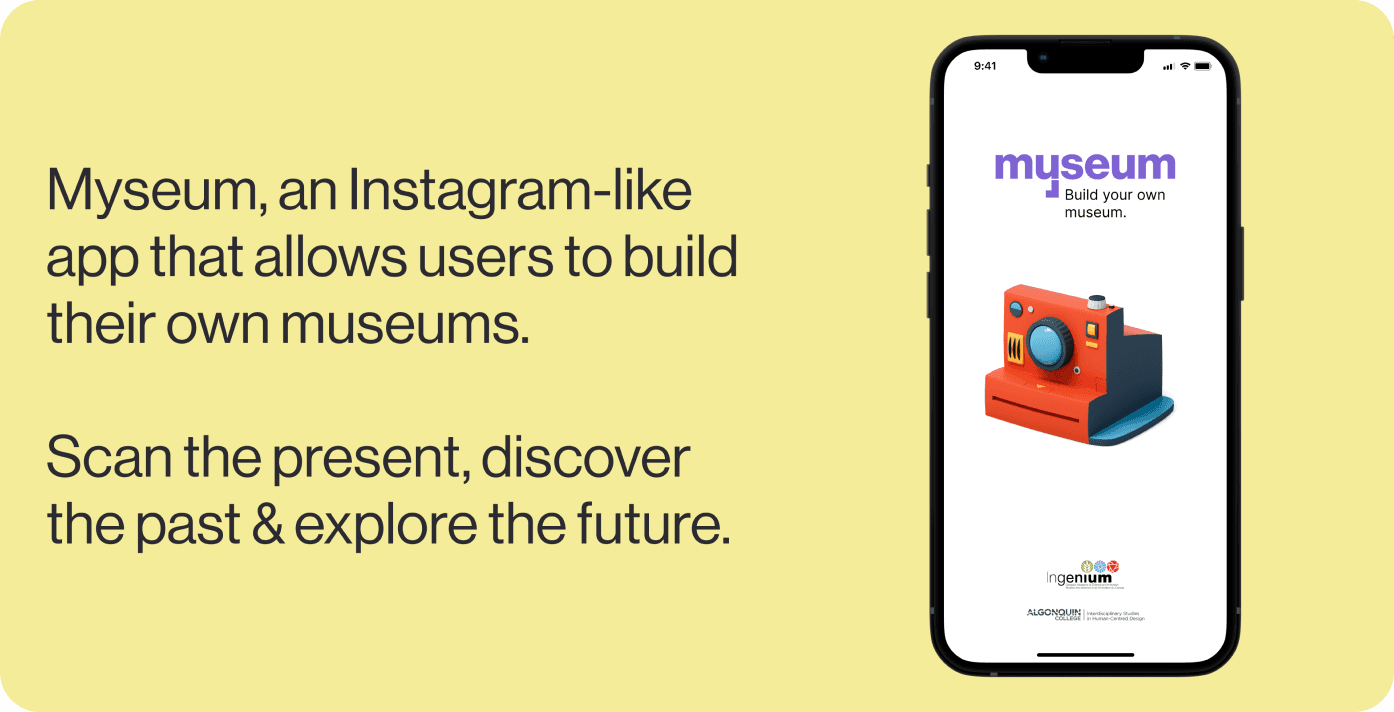
Myseum is a mobile app that turns the world around you into a gateway to museum collections. The core interaction: scan an everyday object with your phone, and the app uses AI and computer vision to find a similar or related artefact in Ingenium’s collection, presenting it with images, stories, and videos about its history and future innovations.
First-time users land on the Camera View to scan objects around them. Once captured, the system identifies the object and searches Ingenium’s database. Users can title their object, share their own story, and switch between Past, Present, and Future tabs to explore an artefact’s history and the innovations happening around it. Each object can be added to a personal collection; their own museum.
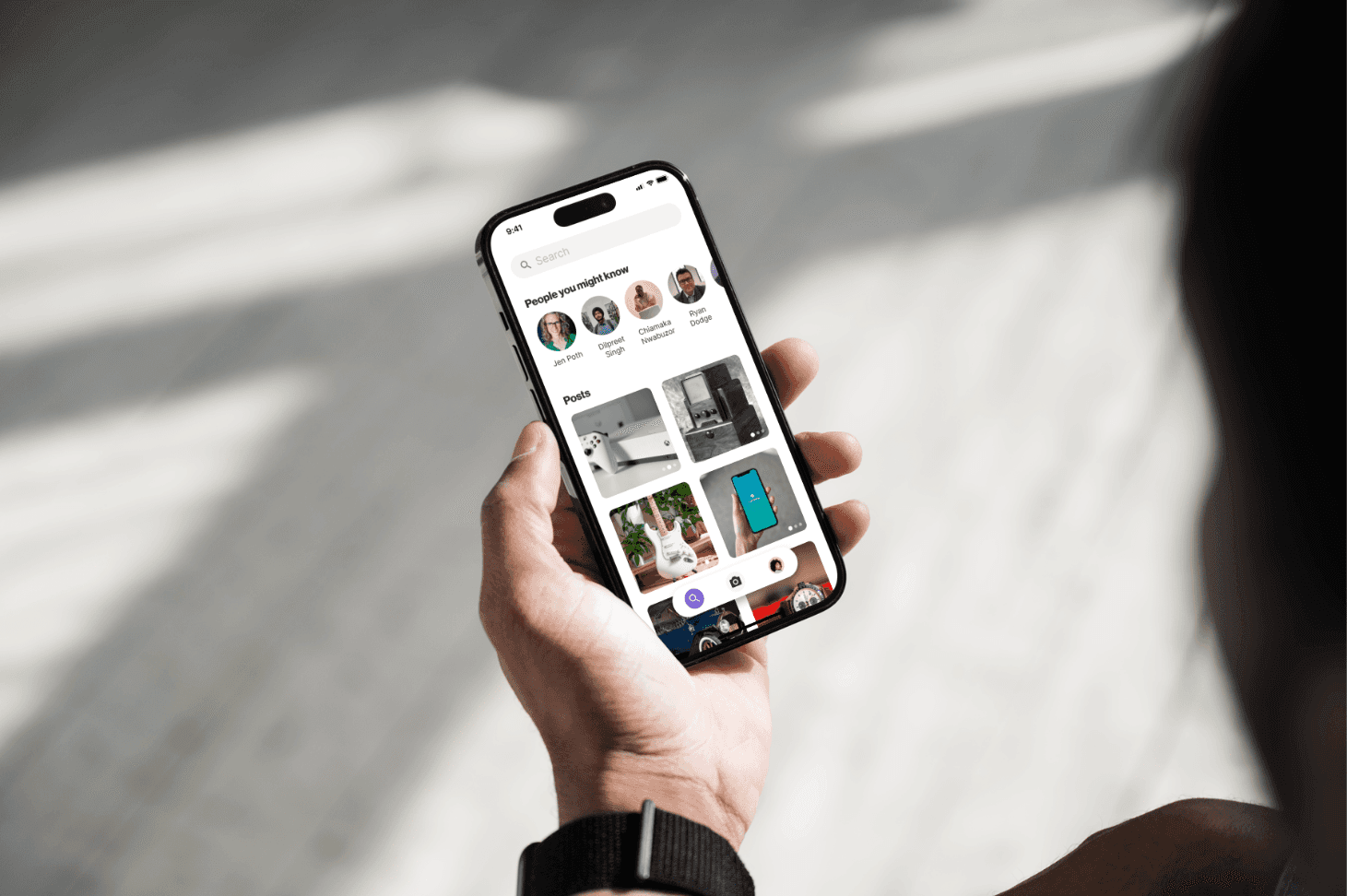
An Explore page adds a social layer: a feed of objects collected by other users, profile recommendations based on contacts, and a search bar for finding friends. This directly addressed what we heard about Gen Z wanting shared experiences.
Validation Response
In a second round of testing with an interactive prototype, testers highlighted three things they loved:
the use of AI and AR to relate everyday objects to museum artefacts
the ability to compare past technology to present and future innovations
and the storytelling behind each artefact.
Myseum succeeded where earlier concepts fell short because it met users in their daily lives and connected those moments to something larger.
Scalability and Next Steps
We presented Myseum as an MVP with a phased scalability plan. In the short term (3–6 months), a pilot limited to specific object categories would be beta tested by students, with AI learning which categories to prioritize.
In the medium term (6–12 months), expansion to broader student programs, scavenger hunt promotions, and new features around choice and inclusivity.
In the long term (12–24 months), national rollout with feature development driven by earlier phase results.
We recommended metrics including promotion clicks, download rates, retention rates, active users, shares, review ratings, and periodic field testing to understand user behaviour.
Reflections and Limitations
This project reinforced a core design principle:
Your first idea is rarely your best idea, and that’s the point.
The pivot from two concepts to Myseum wasn’t a setback, it was the process working as it should. By testing early and being willing to let go, we arrived at something stronger than either original concept.
Looking back, the study’s geographic concentration in Ontario and the absence of questions about cultural identity, gender, and economic background are areas that would need addressing for a national rollout. Accessibility would also need thorough evaluation through AODA and Accessible Canada Act standards.
Museums are trusted sources of information in an era where trust is scarce. Gen Z is curious, creative, and eager to learn but on their own terms.
Myseum was our answer: meeting this generation in their daily lives and connecting the ordinary to the extraordinary.